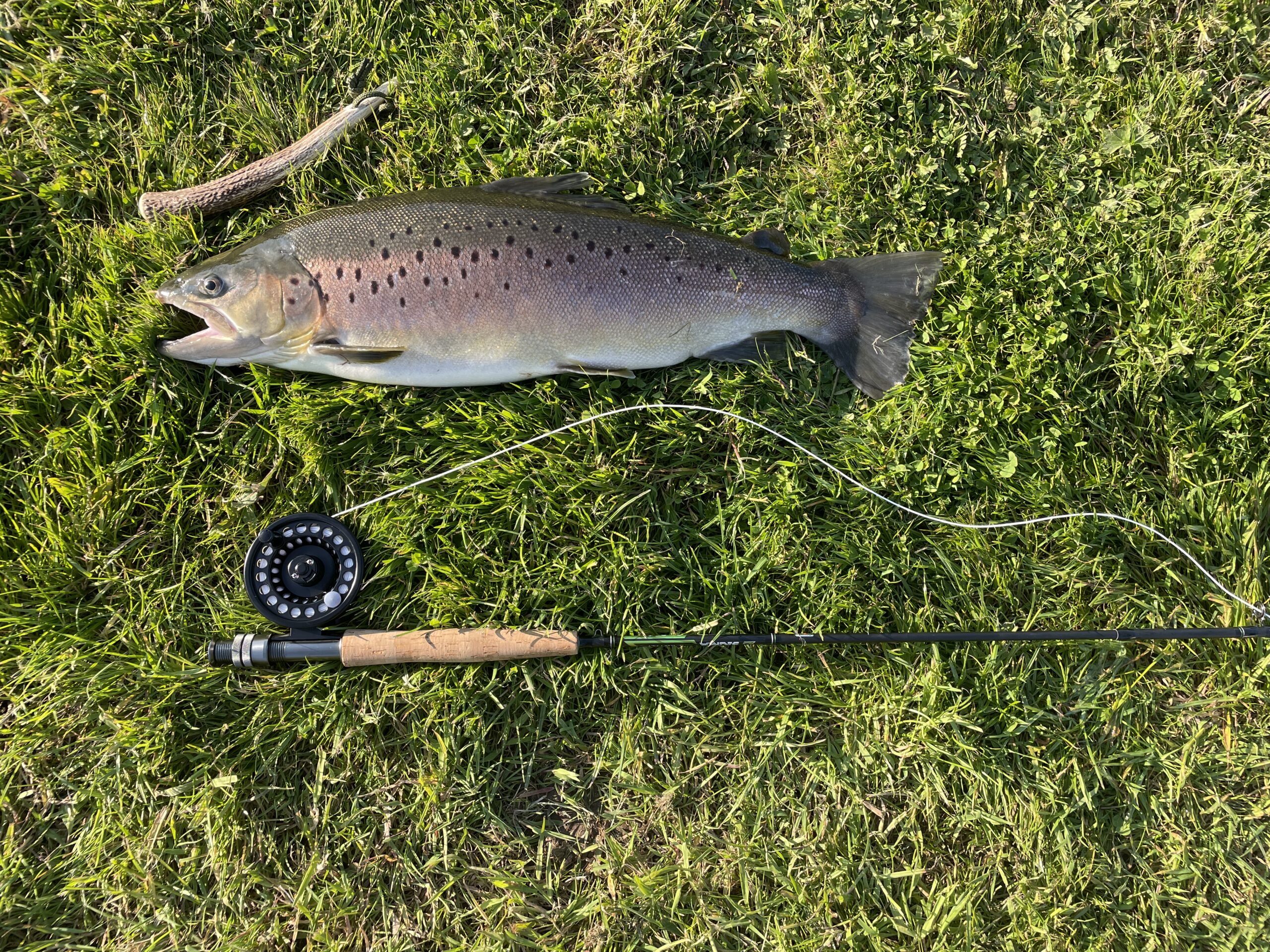
The use of triploid brown trout has become a topic of increasing interest, particularly on chalk streams such as the River Kennet. Triploid trout are infertile fish produced by treating fertilised eggs so they retain an extra set of chromosomes. This makes them sterile and, in theory, a safer option to stock alongside wild trout than fertile farm‑reared fish.
With December and January being critical months for wild brown trout spawning and post‑spawning recovery, it is important to look carefully at both the advantages and drawbacks of stocking triploids at this time of year.
The Pros of Stocking Triploid Trout
No Risk of Interbreeding with Wild Trout
One of the biggest advantages of triploid trout is that they cannot breed with wild brown trout. This means the genetic integrity of wild Kennet trout shaped over generations to thrive in chalk‑stream conditions is protected from dilution by farmed genetics. For rivers with valuable and distinctive wild stocks, this is often seen as the strongest argument in favour of triploid stocking.
Better Overwinter Survival Than Diploids
Research suggests that triploid trout can survive the winter better than fertile (diploid) stocked fish, largely because they do not invest energy in spawning behaviour. Studies tracking trout over winter have shown that triploids tend to maintain body condition and remain in the river longer than fertile stocked fish, which are often weakened or lost after spawning attempts.
This was certainly something I observed during my first season at Barton Court. We saw some very impressive fish caught early in the season, with many in excess of 5 lb. These fish clearly had not been stocked at that weight. Instead, it appears that after enduring a tough winter, combined with the abundance of food washed into the river during flood events, they were able to flourish and put on significant condition.
The Cons of Stocking Triploid Trout
Competition for Food and Space
Although triploids do not reproduce, they still compete with wild trout for food and habitat. During winter, when natural food levels are low and wild fish are either spawning or recovering from spawning, this additional competition can be significant. Reduced access to food and holding water may lead to poorer spawning success and slower post‑spawn recovery for wild trout.
Behavioural and Ecological Effects
Stocked fish including triploids often behave differently from wild trout. They may disperse downstream from release points, increasing pressure on river stretches that would naturally support fewer fish. There is also evidence that stocking can influence the wider ecosystem, for example by reducing invertebrate populations or increasing predation on small fish and other aquatic organisms.
On a chalk stream like the Kennet, where ecological balance is finely tuned, even subtle changes can have knock‑on effects throughout the food web.
Conclusion: A Balanced Approach
Stocking triploid trout can offer a pragmatic compromise between maintaining recreational fishing opportunities and protecting the genetics of wild brown trout. The main benefits are reduced genetic risk and improved over‑winter survival, while the downsides include increased competition with wild fish, uncertain ecological impacts, and the danger of masking underlying habitat or water‑quality problems.
Ultimately, triploid stocking should be viewed as one tool within a broader management toolbox, not a solution in its own right. Habitat restoration, improved water quality, and measures that support natural trout reproduction are especially important during the winter spawning months of December and January, when wild trout are at their most vulnerable.
A cautious, well‑considered approach informed by local conditions and ongoing monitoring is essential if the River Kennet’s wild trout are to continue thriving alongside any stocked fish.