Fishing commercially for trout in rivers in France was still common practice until the 1960’s when a law banned the resale of wild salmonids. This coincided with the growth of trout farms providing low-cost rainbow trout for the pot, putting fishermen who harvested the streams and rivers for markets and restaurants out of business.
It also said adieu to a generation of fly fishermen who discovered that the worm and the minnow weren’t the most productive way to catch trout. It was fur and feather. These were fishermen who fed their families, not out of the fruits of their labours, but the fruits of their flies.
A host of deadly patterns flew off their vices. Flies like the Cul de Canard didn’t just out-think educated trout – they outperformed other fishing methods.
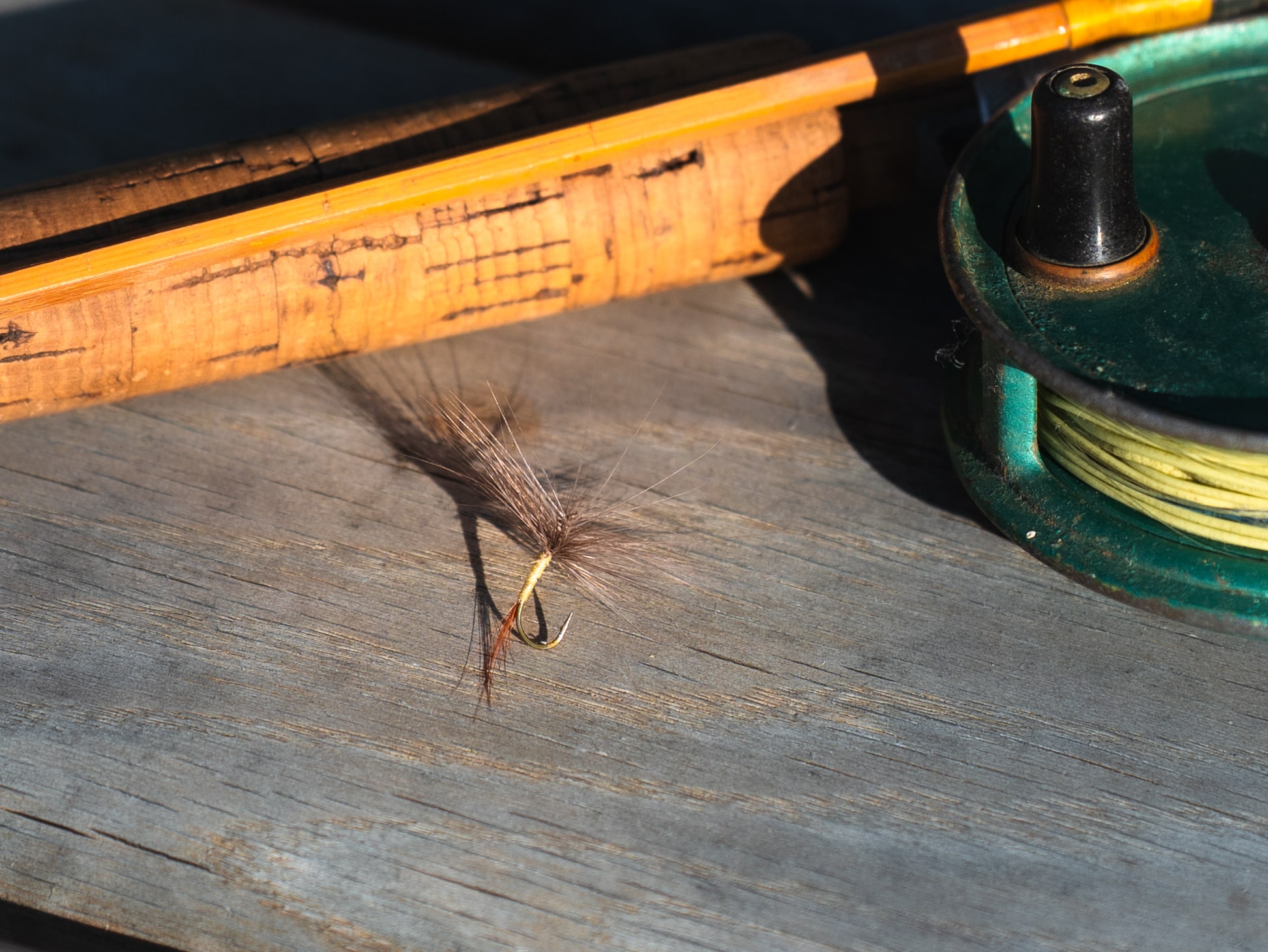
Simple and effective, the Gris à Corps Jaune (Grey with Yellow Body) was the favourite of the fishermen who needed to fill their baskets – and pockets – during May hatches of Spring olives.
So well worth tie – and tie.
Tie your own:
- Vice a #12-18 Tiemco TMC100 hook
- Tie primrose yellow thread to bend as body, tying in reddish-brown hackle fibres as tail
- Lightly waxed, professionals would tie in this thread with slightly soiled fingers, giving it a greenish tint. (The ‘Master Touch’, connoisseurs called it)
- Behind the eye, tie in and wind on 3 turns of a solid grey hackle
- Behind this, tie in another 3 turns of a second grey cock hackle. With thumb and forefinger, pull this hackle forward, winding thread over the roots of the fibres so that they slope through the first hackle. This thickens the collar and improves the float
- Whip finish, here. At the shoulder, not the eye
Keepers Tip:
A different alternative to the ever-popular Adams and CDC patterns, this underused fly could definitely help you put a few extra fish on the bank. Trout that seem to have already seen everything may think twice when this drifts elegantly over their heads.