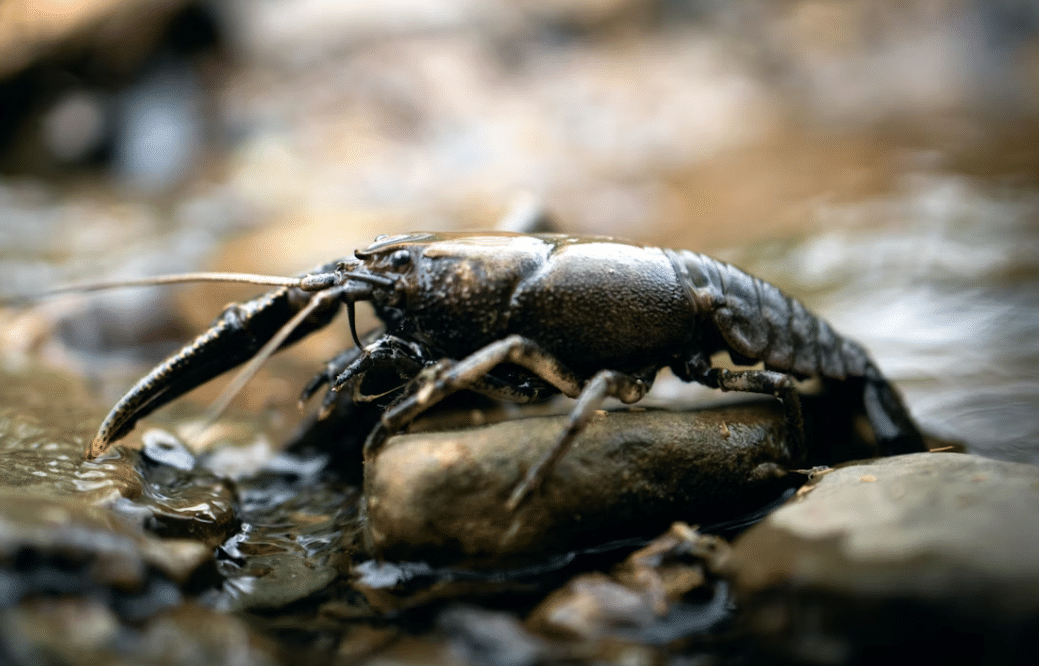
If you’ve ever wandered along the banks of Barton Court on a warm summer evening, you might notice a flicker beneath the water, or come across empty claws and shells left behind near the edge. Those little signs usually mean one thing: crayfish. Quiet, busy, and surprisingly clever, they’ve become one of the Kennet’s most interesting residents.
Native vs. Invader
The Kennet used to be home to the native white-clawed crayfish. They were shy, slow-growing little things, thriving in clean, well-oxygenated water. These days, though, you hardly ever see them. The reason? The American signal crayfish.
Introduced to Britain in the 20th century, signal crayfish are bigger, bolder, and far more adaptable. They push the natives out, eat the same food, take over the same shelters — and they carry crayfish plague, which wipes out white-clawed crayfish without affecting themselves. It’s a tough world out there for the natives, and sadly, they’ve all but vanished from the Kennet.
Engineers of the Riverbed
Crayfish aren’t just hanging out; they’re shaping the river. Signal crayfish burrow into the banks, speeding up erosion and sometimes causing sections to collapse. They eat plants, insects, and fish eggs, which can change the way life in the river works.
But they’re not all bad news. Otters, herons, and other predators rely on them for food. In some lakes, their presence has even helped perch grow to record-breaking sizes. So, in a way, they’re both a headache and a lifeline — a tricky balance, but a part of what makes the Kennet…well, the Kennet.
Walking the Kennet with New Eyes
Once you start noticing them, signs of crayfish are everywhere. Hollowed banks, snapped claws, or the occasional live one hiding under a stone all tell a story of a river adapting, changing, surviving. For anglers, conservationists, or anyone wandering the banks, it’s a reminder that rivers are living things, shaped by nature and by us.
Looking Ahead
Efforts continue to protect the few remaining pockets of native white-clawed crayfish nearby and to manage the impact of the signal crayfish where possible. Getting rid of them entirely from the Kennet? Probably impossible. But just being aware, paying attention, and understanding how the river works can make a big difference.
So next time you’re walking along Barton Court, stop and peer into the shallows. Look closely. Beneath the surface, crayfish are busy — shaping the river one claw, one burrow, and one ripple at a time.