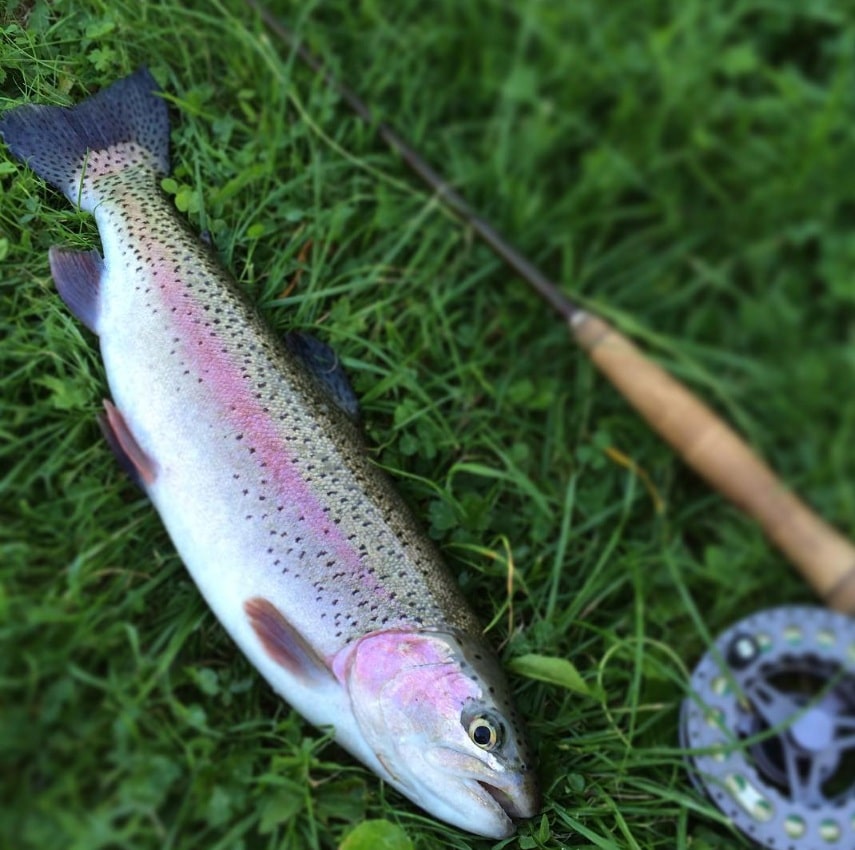
If you wander along any chalk stream in southern England, you usually expect to see wild browns, grayling, or maybe a pike pretending to be a log. But every now and then, a flash of chrome and rose streaks through a pool, a rainbow trout. They’re not native, of course, but in many stocked chalk streams they’ve become a familiar and exciting part of the fishing, and when the conditions are right, they offer some of the most exhilarating sport you’ll find all season.
Here at Barton Court, we’re lucky enough to be one of the few fisheries allowed to stock a small number of rainbows. I’ve got to say, they add a really welcome twist to the fishing here.
A Non-Native That Won Anglers Over
Rainbow trout came to the UK from North America back in the late 19th century, and it didn’t take anglers long to fall in love with them. Their aggressive takes, spectacular jumps, and bright colours made them instant stars.
They rarely breed successfully in English rivers, but chalk streams, with their steady flows and mineral-rich waters, can sometimes support small, naturalised pockets. Even when they don’t reproduce, stocked rainbows settle in surprisingly quickly. After a while, they start acting more like wild fish than anything freshly stocked. You can almost see them learning the river.
Why Rainbows Thrive Here
Chalk streams give rainbow trout some of the best conditions they could ask for, even if it’s just for part of their lifecycle.
• Cold, stable water keeps them active all year.
• Plenty of insects, from olives to sedges to shrimp, means food is always on tap.
• Dense aquatic plants provide shelter, ambush spots, and shade.
• Crystal-clear water suits their sharp eyes and bold feeding habits.
Once they’ve settled, rainbows often take up the same feeding lies as wild browns, but with a very different style. Where a brown trout might hover cautiously, a rainbow often rushes in like it owns the place, fast, opportunistic, and utterly unforgiving if your knot isn’t perfect.
The Fight: Why We Love Them
If brown trout are clever, rainbows are sheer power. Hooking one can be a shock if you’re used to gentle grayling taps or careful brown trout sips. Expect runs both upstream and downstream, often with explosive leaps in the shallows.
Even modest rainbows can test fine tippet and light tackle, especially in the tighter channels here at Barton Court. And just when you think you’ve got one beaten, they often find a second wind the moment they see the net. I’ve had more than one angler groan and laugh at the same time because of that.
Seasonal Behaviour
From my experience, rainbows give their best sport in the height of summer. Those long July and August days when the browns seem to have gone on strike? There’s usually a rainbow happy to take your fly.
It’s a real blessing. Even on quiet days, you can usually tempt one to feed, giving you a fighting chance of a good catch or at least an unforgettable moment by the water.
A Controversial but Colourful Character
Some anglers prefer rivers with only wild trout or grayling, while others welcome the challenge and excitement that rainbows bring. When stocked responsibly, they offer:
• Reliable sport throughout the season
• A spirited fight for beginners and experts alike
• Variety in rivers that are otherwise dominated by browns and grayling
• A visually stunning fish, perfect for photos or the barbecue
When handled carefully, rainbows can enhance the river experience without ever feeling out of place.
Final Thoughts
Rainbow trout might be outsiders, but they’ve earned a place in the hearts of many anglers. Bold, colourful, and relentless, they bring a special energy to the river. Whether it’s a tiny size 20 dry or a gold-headed nymph fished deep, they have a way of turning an ordinary day on the water into something memorable.
Honestly, there’s something about watching one streak through a pool while the sun glints off the water that never fails to put a smile on my face. Rainbows might not be native, but they make days on Barton Court unforgettable.