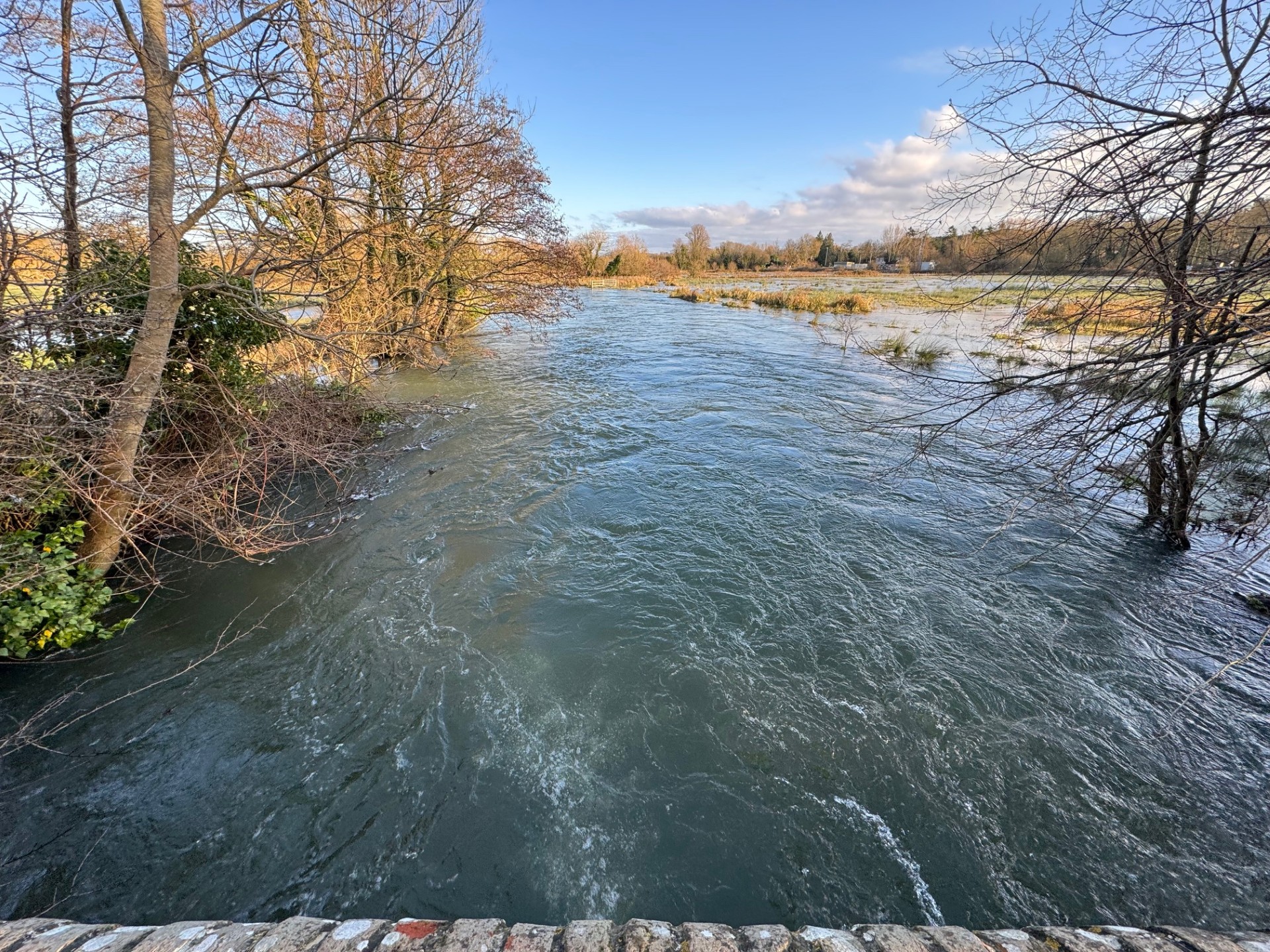
Anyone who fished here last winter won’t forget it in a hurry. Beat markers vanished under the water, the meadows turned into a shallow lake, and waders were suddenly the most valuable thing a person could own. Fast-forward to this season, and it feels almost unbelievable: warm weather, low winter rainfall and long spells of dry ground have allowed access to areas that were completely unreachable this time last year.
For us, that change has been a rare opportunity. With the meadows firm underfoot, we’ve been able to get back into parts of the water system that haven’t been properly worked on in decades. Re-cutting the historic ditches and carrier streams has already transformed the flow across the floodplain, but the real surprise has been what was hiding in the vegetation and silt. We’ve started uncovering Victorian brickwork, stone sluices, ancient paddle gates, and small bridges, fragments of a long-forgotten network that once controlled the water across nearly every inch of the estate.
Two centuries ago, these meadows were not just fields. They were a finely engineered machine, operated by workers known as drowners. The title sounds strange today, but it simply refers to men whose job was to “drown” the meadows in winter and spring with carefully timed, shallow irrigation. By letting the river wash slowly over the grass, the drowners delivered rich silt and nutrients from upstream. As soon as the right level was reached, they shifted boards, opened gates, and spilled the water into the next compartment. When finished, everything was drained away to let the grass surge into early growth.
A first-class water meadow system demanded astonishing precision. The height difference between flooded and drained ground could be as little as a few inches, and every paddock had to fill and empty on schedule. At full operation, Barton Court would have been a hive of activity. Ditch men, rake men, and labourers walked the banks daily; drowners adjusted sluices throughout the night when frosts threatened crops; estate horses hauled timber and stone to reinforce the banks; and gangs of workers dredged and re-profiled carriers to keep the water flowing at exactly the right pace. Many of the structures we are rediscovering, the little culverts, the shutter slots worn smooth by years of use, were once essential to that routine.
Standing out there today, with the river running clear and the meadows lying golden in the winter sun, it’s easy to forget how intensely managed this landscape once was. The system wasn’t decorative; it was a cutting-edge agricultural innovation. Water meadows could produce early grass long before the surrounding countryside greened up, and that meant stronger livestock, better yields, and the kind of wealth that shaped estates like this one.
The flood last winter reminded us how powerful the river still is. The dry season that followed has shown us how much of the valley’s history is still hidden beneath the reeds and silt — and how much of it can be restored if we work with the water rather than against it. Every sluice uncovered, every bridge dug out, helps the modern meadow system reconnect with its past. Over time, as more of the network is brought back to life, the landscape will begin to behave as it once did: soaking, filtering, draining and feeding itself in a natural rhythm.
For anglers and guests, none of this work is cosmetic. A functioning water-meadow system improves habitat, spreads out flood peaks, feeds invertebrate life, and ultimately benefits the river we all care about. And there’s something special about knowing that when we adjust a channel or clear a ditch today, we’re standing in the footprints of the drowners who shaped this river centuries ago different tools, same mission.