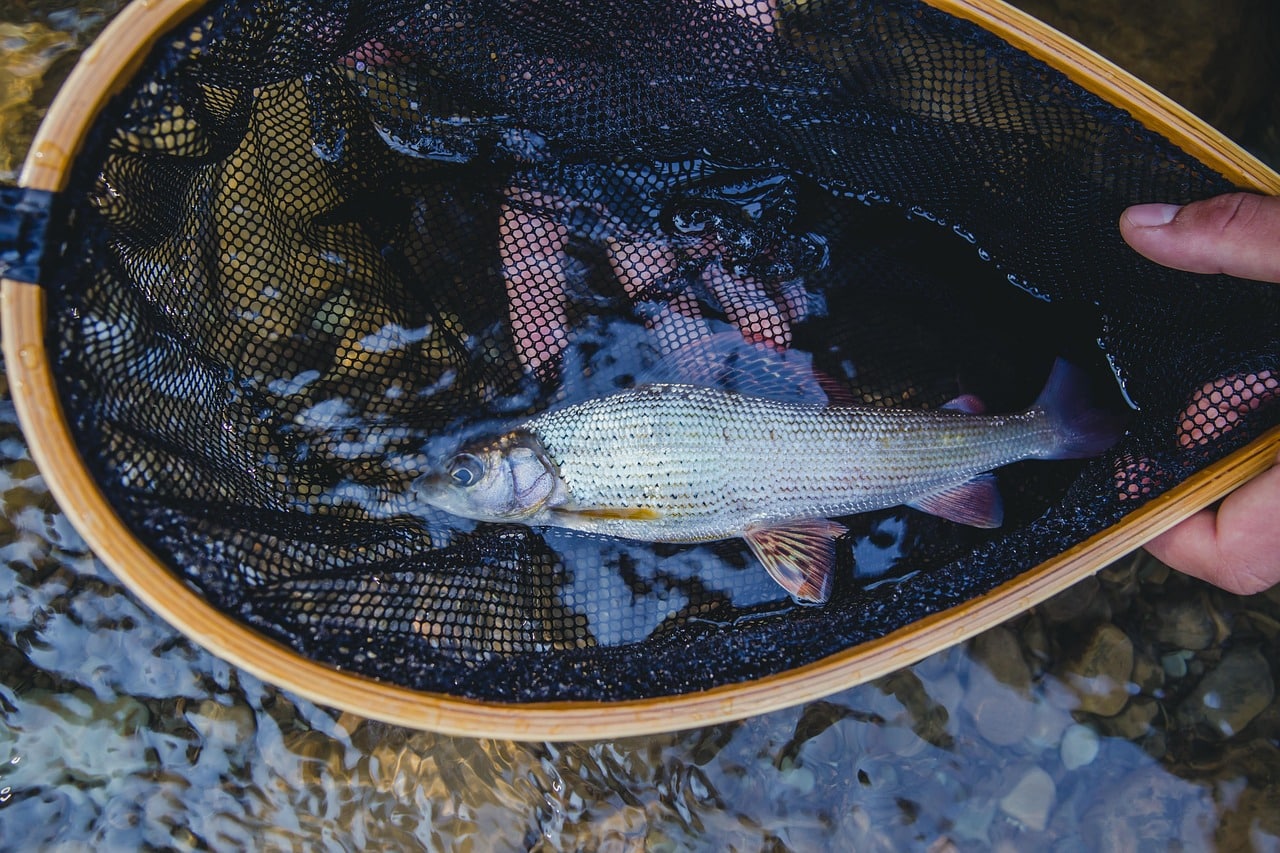
As the first frosts settle across the meadows at Barton Court, thoughts naturally turn to the Lady of the Stream. The grayling is possibly my favourite fish to catch in the winter, delicate, beautiful, and arguably the most rewarding species to target when the days shorten and the river quietens.
I’ve spent many hours chasing grayling on most of the southern chalk streams, but my best days have undoubtedly been on the Dorset Frome. I’m still haunted by a fish I lost on a pink shrimp that was easily over 3lb, and I’ll never forget the huge grayling I landed on the last day of the 2021 season, only to discover it was hooked in the belly. Moments like these stay with you. Sadly, grayling numbers at Barton Court have dwindled in recent years, but hopefully one day they will return in enough strength to offer quality winter fishing once again.
Winter Time
Grayling thrive in cold water. As temperatures drop, insect life thins out, and trout shift their focus toward spawning, the grayling step confidently into centre stage. Their willingness to feed through the coldest months makes them perfect quarry for anglers looking for challenge, reward, and a cure for cabin fever.
Reading the River in Winter
Winter chalk streams can look deceptively simple with clean gravel beds, slow glides, and deep green weed beds, but subtlety is key.
-
Find the softer water. Grayling often stack in the seam between fast and slow flow, conserving energy while still intercepting food.
-
Depth matters. As temperatures drop, fish drift into deeper holes and slots. If you’re not getting down to them, you’re fishing over empty water.
-
Sight fishing is still possible. On bright days, a pair of polarised glasses can reveal ghost-like shapes hovering just above the gravel.
Gearing Up
You don’t need fancy kit to enjoy winter grayling fishing, but a few choices make a big difference:
-
Rod: A 10–11ft #2–#4 rod is ideal for Euro-nymphing.
-
Tippet: Go fine. 6x or 7x fluorocarbon often outperforms heavier diameters in crystal-clear chalk streams.
-
Clothing: If you’re not warm, you won’t fish well. Good thermal layers and fingerless gloves are essential.
My Top Nymphs for Grayling
-
Pink nymphs (pink seems irresistible to winter grayling)
-
Duracell nymph
-
Jenkins’ Hot Rib Hare’s Ear
-
Pink or orange tags
Remember: Depth beats pattern every time. A slightly wrong fly at the correct depth will out-fish a perfect imitation riding too high. If you’re tackling really deep pools, try the Fulling Mill Grayling Bomb in pink.
Techniques That Work
-
Euro-Nymphing
Probably the most effective winter method. Tight-lining lets you present heavy bugs naturally and feel even the lightest plucks. Grayling may take delicately, but once hooked they fight like demons.
-
Traditional Czech Nymphing
Short-line, heavy flies, and direct contact. Ideal for deep, fast winter slots where the fish hunker down.
-
Dry Fly (Yes, Really!)
On crisp winter afternoons, you may get a brief hatch of midges or tiny olives. When that happens, grayling rise with surprising enthusiasm. I always keep a few size 20 F-Flies or Griffith’s Gnats in my nymphing box just in case.
The Joy of Winter Fishing
There’s something deeply special about standing beside a chalkstream in winter, with mist lifting from the water and frost crunching under your boots. Add the electric jolt of a grayling tapping your nymph, the flash of that iridescent dorsal fin, and the frantic, lively scrap that follows. On the right setup, it’s possibly one of the best fighting fish in Britain, in my opinion.
Final Thoughts
Winter grayling fishing is a blend of finesse, observation, and a willingness to brave the cold. It rewards anglers not only with beautiful fish, but with a deeper connection to the river in its most peaceful, atmospheric state. If you’ve never ventured out in the colder months, this winter is the perfect time to begin.